Magisk
The most widely used rooting method for Android — systemless, open source, and the gateway to a large ecosystem of modules.
What is Magisk?
Magisk is an open-source rooting framework created by topjohnwu. It is called "systemless" because it patches the device's boot image instead of modifying the system partition: the operating-system files stay untouched, while root access becomes available once the patched image boots.
What it gives you
Superuser (root) access with per-app prompts and logging; installable modules that change system behavior without editing /system; Zygisk, which runs module code inside the Android runtime; and the DenyList, which keeps selected apps away from Magisk's modifications.
Before you root
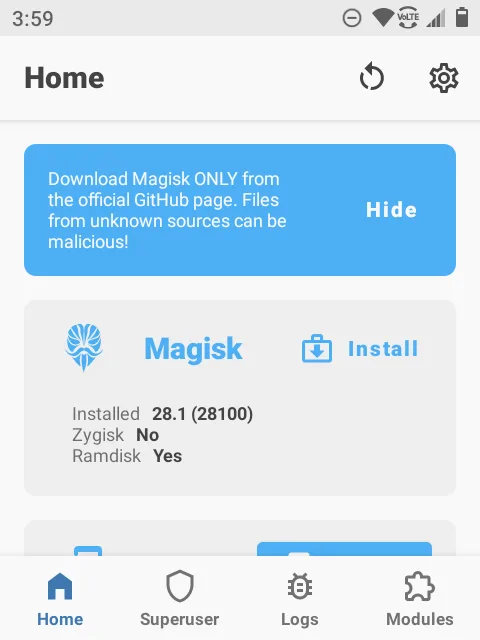
Magisk requires an unlocked bootloader on virtually all devices, and rooting trips integrity checks that some apps — banking and payment apps above all — actively look for. The Magisk app itself warns: download Magiskonly from the official GitHub page; files from unknown sources can be malicious. Knowing your exact device and bootloader state is step one — our free browser-based scan reports both over USB.
Official links
- github.com/topjohnwu/Magisk— the only official source: releases, documentation, and source code
This page is an independent, unofficial overview of Magisk, which is developed bytopjohnwu. Root My Android is not affiliated with, endorsed by, or sponsored by topjohnwu. Android is a trademark of Google LLC. All other product names, logos, and brands mentioned are the property of their respective owners and are referenced here for identification and informational purposes only.
